Respiratory physiotherapy in Casablanca — baby and adult
A chesty cough that won’t shift, bronchiolitis, a chest that sounds blocked.
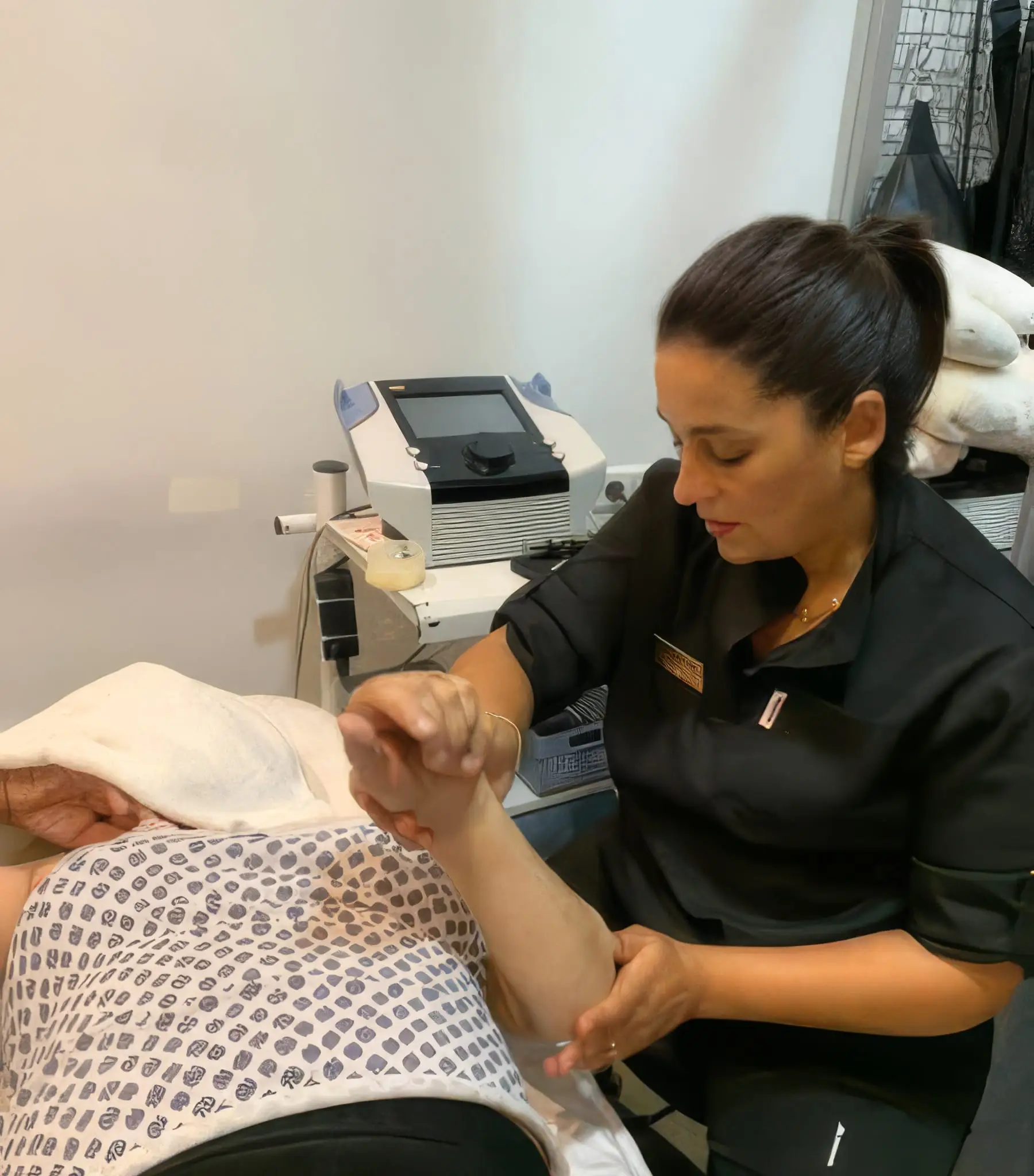
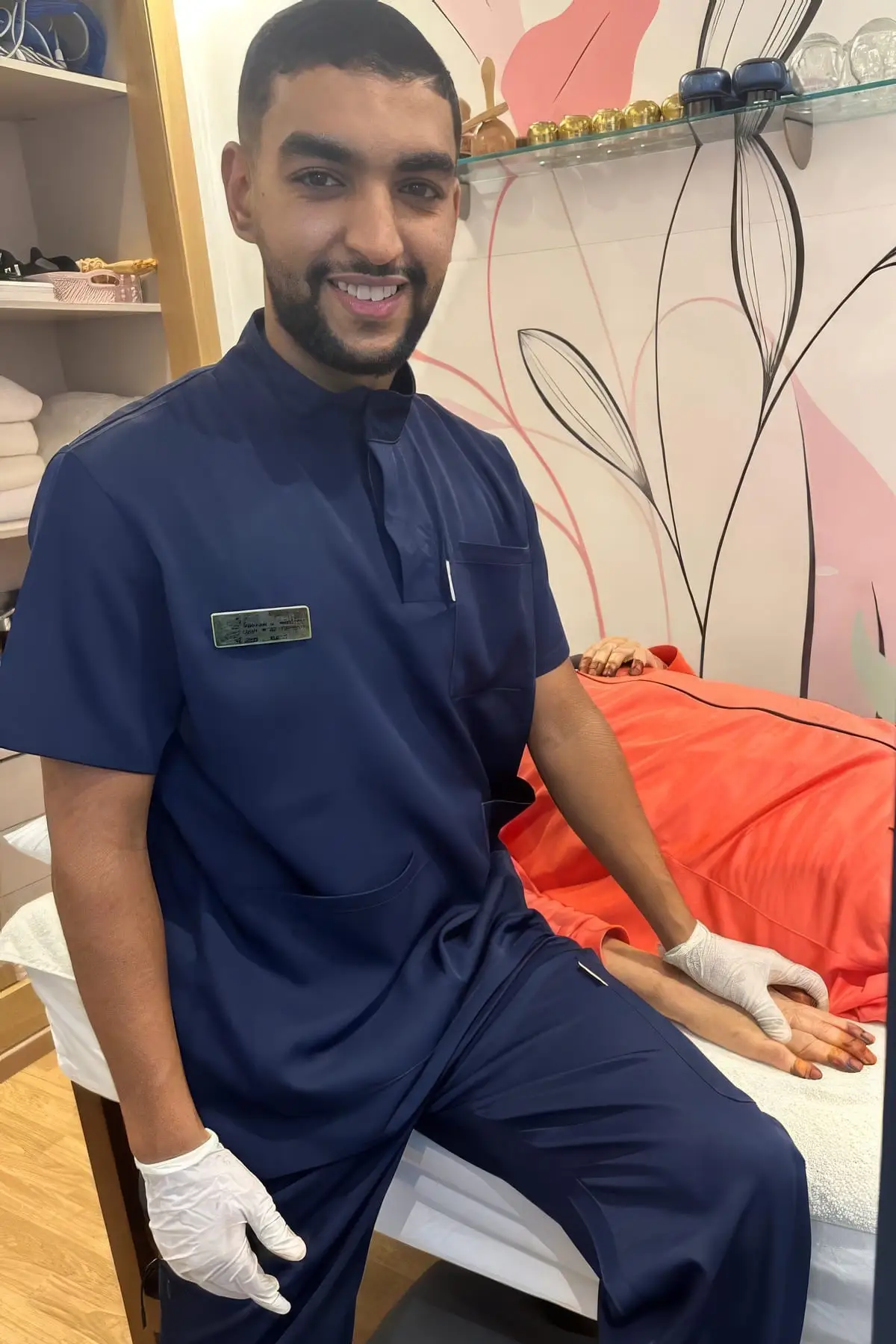

Respiratory physiotherapy — babies and adults
What we do for a baby and what we do for an adult are not the same thing at all.
When to see us
- A chesty cough that’s dragging on and not clearing by itself.
- Bronchiolitis in a baby, diagnosed or suspected.
- Wheezing, or breathing that sounds blocked.
- A tight chest, or breathing made uncomfortable by congestion.
- Follow-up your doctor or paediatrician has asked for.
Emergency. Breathing very fast, marked difficulty breathing, an abnormal skin colour in a baby. These are signs of respiratory distress. Go to a doctor or to A&E now — before any physiotherapy session.
With a baby
A congested baby should be seen quickly — ideally at the first sign that breathing has got uncomfortable.
Gentle techniques that work with the baby’s own breathing out, matched to how fragile an infant is. We clear the upper airway if it needs it, and watch how your baby takes it the whole way through. You leave with advice for afterwards: positioning, clearing the nose, and what to watch for.
With an adult
Acute or chronic bronchitis, COPD, asthma, the weeks after a chest infection. Clearing matched to the condition, breathing exercises we guide you through, postural work, and advice for handling a flare-up day to day.
How a session goes
- You describe the situation: the patient’s age, the symptoms, how long it’s been going on.
- The physiotherapist listens to the breathing and works out how blocked the chest is.
- The clearing session itself, with techniques matched to the age and to the condition.
- Advice for afterwards: what to do during the day, and what to keep an eye on.
How many sessions
It depends how it goes. Sometimes one session is enough; sometimes it’s follow-up over several days, which is common with bronchiolitis.
What it costs
The price depends on the patient’s age and the number of sessions, and we give it once we’ve spoken. The assessment is free.
All the pricesWhat to bring
A prescription if you have one, comfortable clothes, and your most recent report or scan if there is one.
For an infant, a prescription from a doctor or paediatrician is generally needed.
Let’s talk
Call us, or send a WhatsApp message in two lines: the age, the problem, how long.
Résidence Le 633, rue de Goulmima — Bourgogne, Casablanca 20000
- Monday : 7h30 – 19h
- Tuesday : 7h30 – 19h
- Wednesday : 7h30 – 13h
- Thursday : 7h30 – 19h
- Friday : 7h30 – 19h
- Saturday : 8h – 13h
- Sunday : Closed
Taken from the centre’s own Google listing on September 20, 2026. Call to check before you come.
Frequently asked questions
Is chest physiotherapy painful for a baby?
The techniques used on infants are gentle and matched to how fragile they are. A baby may cry during the session — that’s normal, and it actually helps bring things up. The technique itself is not violent.
Do I need a prescription?
A prescription from a doctor or paediatrician is generally needed, particularly for bronchiolitis in an infant. Tell us your situation and we’ll explain the steps.
How many sessions for bronchiolitis?
It varies with how the child is doing. Some babies are through it in one or two sessions; others need closer follow-up over several days.
Can we come urgently with a congested baby?
Emergency. Breathing very fast, marked difficulty breathing, an abnormal skin colour in a baby. These are signs of respiratory distress. Go to a doctor or to A&E now — before any physiotherapy session. Otherwise, send us a WhatsApp message describing what is going on and we will do our best to find you a slot quickly.